
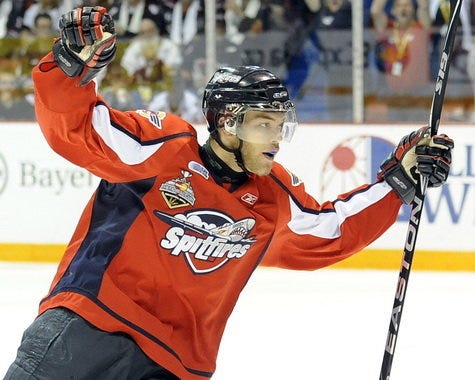
The opening night of the 2010 Memorial Cup inside Brandon’s Keystone Centre was loud, crowded, and restless. Before a single puck could drop, the building sat through the full slate of tournament ceremony: dignitary speeches, official party welcomes, full roster walkouts, and the ceremonial faceoff. The long delay did nothing to cool off the home crowd. If anything, it turned Brandon’s junior hockey barn into a pressure cooker.
Windsor understood the stakes of the opening minutes better than anyone.
Twelve months earlier in Rimouski, they had sleepwalked out of the gate, dropped their first two games, and had to spend the rest of the week clawing out of a self-inflicted grave. They survived that ordeal to win their first national championship, but nobody in their dressing room wanted a repeat performance. The plan in Brandon was simple: strike early, quiet the building, and set the terms of engagement immediately.
Taylor Hall drove that message.
He played the game on the edge of control, daring defencemen to match his top gear. Brandon’s counter-punch was equally straightforward. Get physical. Finish checks. Take Windsor’s thoroughbreds out of their rhythm before the engine got rolling.
On his first shift of the game, Hall chased a dump-in down the left wing at full speed. Wheat Kings defenceman Travis Hamonic stepped up to deliver a statement. Hamonic, a punishing 6-foot-2 presence, lined up the draft’s projected first overall pick and drove straight through him. The collision was violent. Knocked off-balance at full stride, Hall careened into the end boards, neck snapping back as he folded backward in a motionless heap.
The arena went silent.
Hall lay crumpled against the dasher, blood dripping from his nose and a cut on his forehead. Up on the suite level, Windsor general manager Warren Rychel ripped off his credential lanyard and threw it down in pure disgust, fearing the worst for his star winger. It was the kind of impact that instantly sucks the air out of a packed barn—where everyone watches the ice and wonders if the player is getting up at all.
Trainers sprinted out, and Rychel bolted from the suite, heading straight downstairs toward the dressing room area to find out the damage. In the hallway, he ran into the team doctor, who delivered an improbable update: Hall was fine, cleared, and ready to go back out.
“Really?” Rychel asked, surprised. “Okay.”
And off he went. Even with the doctor’s surprise clearance, anyone who had watched Hall over three seasons in Windsor knew the truth: he wasn’t staying out of that game unless someone physically dragged him away.
Hall had already gotten to his skates, making his way to the bench under his own power. No retreat. No hesitation. If Brandon’s objective was to rattle Windsor’s cage and introduce doubt after the long ceremonial delay, the response blew the tournament wide open.
Minutes later, Hall was back attacking off the rush with the puck on his tape. No tentative strides. No scanning for yellow jerseys. Driving wide, he pulled the puck between his legs in a blur, carved past the defender, and tucked a backhand past Jacob De Serres. It was a vicious, highlight-reel response.
Windsor was not going to be intimidated.
The Spitfires rolled to a 9–3 blowout that night, turning what could have been a catastrophic opening shift into an absolute rout on their way to a second straight national crown.
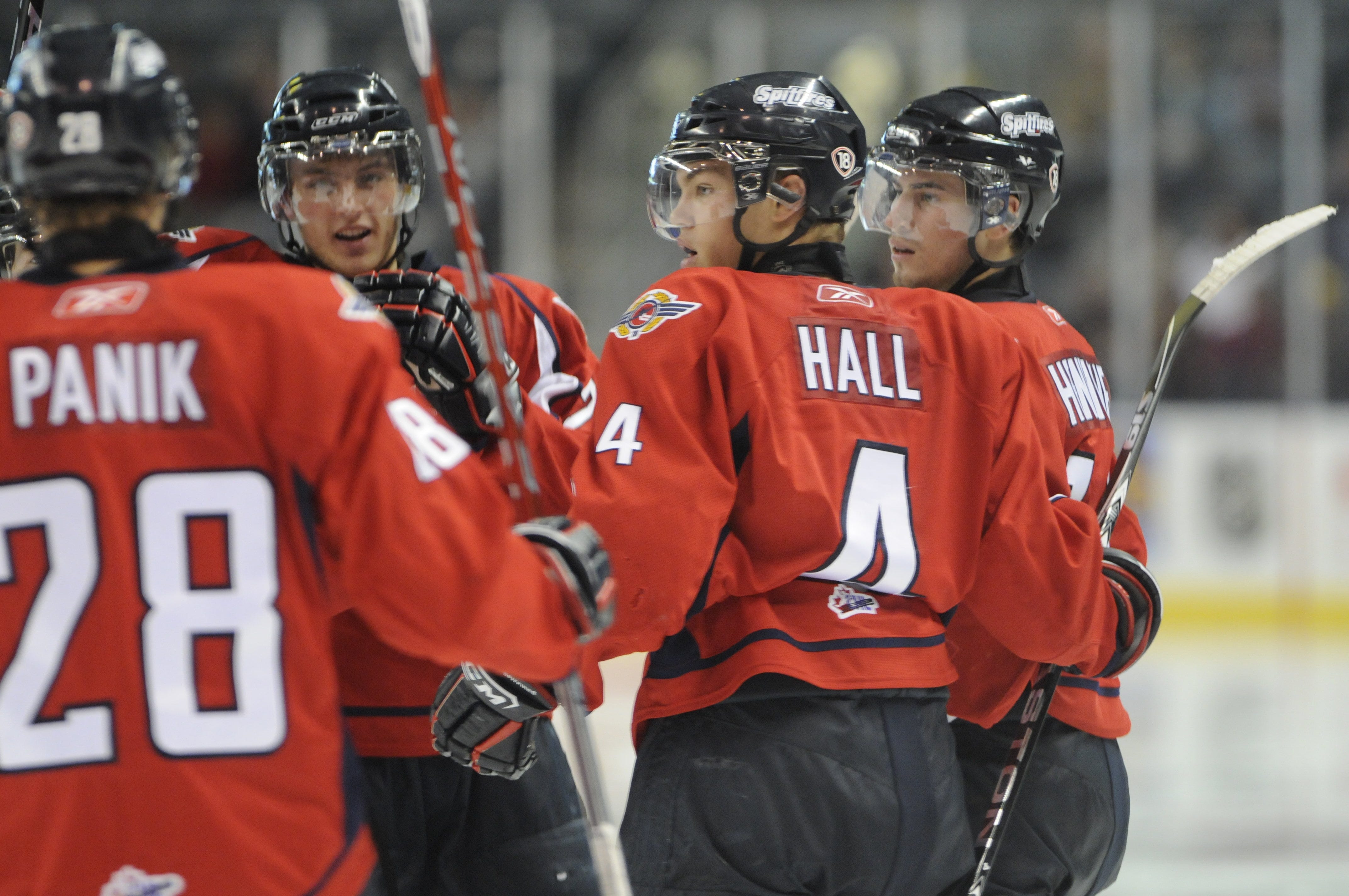
That sequence captured everything that made Taylor Hall a transformational force in major junior hockey.
When Hall arrived in Windsor as the second overall pick in the 2007 OHL Priority Selection, the Spitfires were an organization emerging from years of irrelevance and rebuilding under Bob Boughner and Warren Rychel. Hall accelerated that timeline exponentially. As a 16-year-old rookie, he didn’t ease into the league; he exploded through it, scoring 45 goals to capture CHL Rookie of the Year honours. His skating was explosive, but his competitive appetite was what separated him from typical teenage phenoms.
He didn’t glide around the perimeter waiting for pucks. He hunted them.
By his second season, Hall had turned Windsor into a juggernaut. He was the catalyst for an offensive machine that captured the 2009 OHL Championship, earning the Wayne Gretzky 99 Award as playoff MVP with 16 goals and 36 points in 20 postseason contests. Then came Rimouski, where Hall proved his mettle on the national stage, dragging the Spitfires back from their 0–2 start to capture the 2009 Memorial Cup and taking home the Stafford Smythe Memorial Trophy as tournament MVP.
His draft year in 2009–10 brought relentless scrutiny, framed by a coast-to-coast debate pitting him against Plymouth Whalers centre Tyler Seguin for the top spot in the 2010 NHL Entry Draft. Hall answered by sharing the OHL scoring crown with 106 points in just 57 games, then capped his junior career with that dominant week in Brandon.
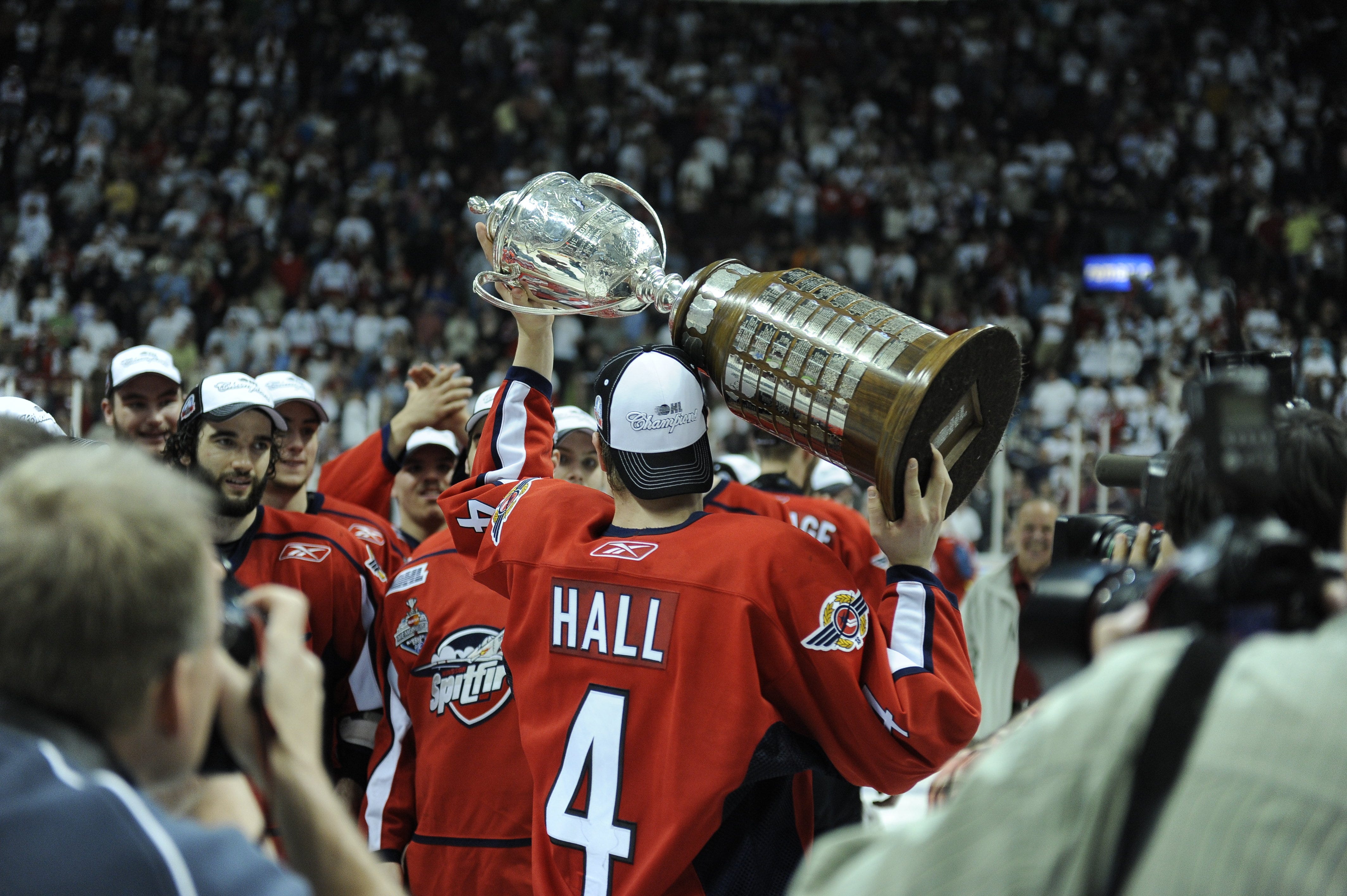
By leading Windsor to back-to-back Memorial Cups and claiming a second straight Stafford Smythe Trophy, Hall cemented a legacy unmatched in modern CHL history. He was the rare junior superstar who combined game-breaking individual brilliance with relentless, physical courage, elevating an entire franchise into one of the most dominant dynasties major junior hockey has ever seen.

Photos: Aaron Bell/HockeyDocs.com