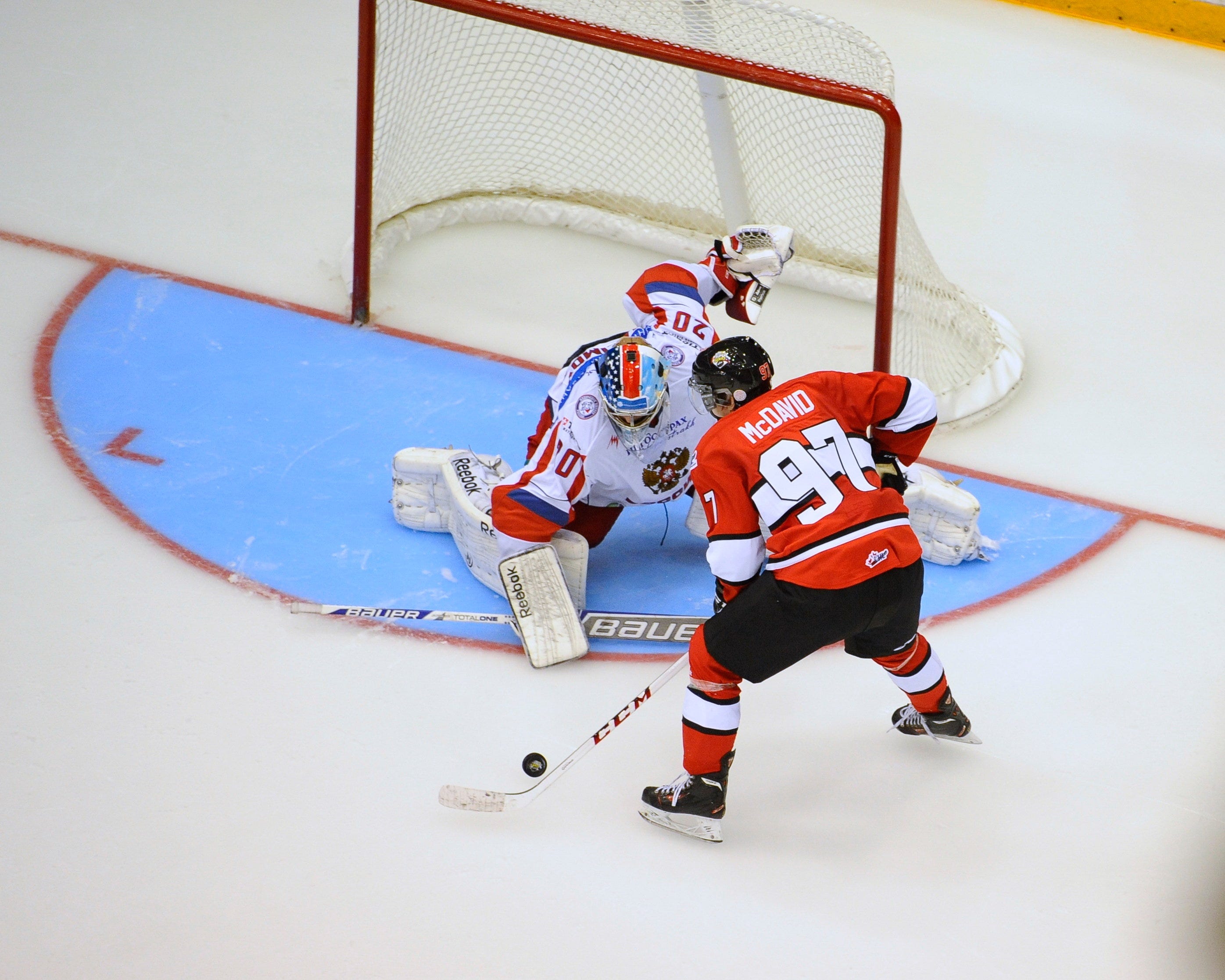

Under five minutes remained in Game 2 when the trap snapped shut.
Tied 1–1 inside Oshawa’s General Motors Centre, Connor McDavid gathered the puck behind his own goal line. He crossed center ice with signature lateral crossovers, building the kind of neutral-zone acceleration that had dismantled the Ontario Hockey League for three winters. Oshawa captain Josh Brown held the blue line, refused to bite on McDavid’s inside-out deke, and forced him toward the wall. Backchecking center Cole Cassels lifted McDavid’s stick from behind, pinning his hands to the glass.
Possession evaporated. Moments later, Dakota Mermis scored for Oshawa, the Generals iced an empty-netter, and the series turned permanently.
Nobody stopped Connor McDavid in junior hockey. Oshawa simply survived him.
The Circus Comes to Town
Every road arena in Ontario treated McDavid like an invading circus.
Granted exceptional player status in 2012 at age 15, McDavid inherited an Erie Otters franchise coming off a disastrous 10-win season. Within two years, he transformed Erie into an offensive juggernaut alongside Dylan Strome and Alex DeBrincat. Yet the individual pressure never abated; opposing coaches game-planned exclusively for him, while fans lined glass partitions three hours before warmups.
“Every building we went into, it was their Game 7,” Strome recalled. “Everyone wanted a piece of him, and he just went out and put up four points.”
He carried the expectations of an entire league without showing a fracture.
The Target on His Back
Dominance made McDavid an unprecedented postseason target.
By the spring of 2015, Otters head coach Kris Knoblauch regularly double-shifted his captain to counter defensive-zone shadowing. Through 20 playoff games, McDavid amassed a historic 49 points—21 goals and 28 assists—playing through heavy stick work and relentless physical abuse.
“The hardest thing when you have that much talent is staying humble and staying coachable,” said Knoblauch. “Connor wanted to be coached. He wanted to be pushed on details. He’s the most competitive player on the ice every single night. Even when teams tried to wear him down physically, he just came back harder on the next shift.”
He took the punishment, absorbed the double teams, and kept attacking.
The Red-Line Gauntlet
Oshawa realized that shutting McDavid down required a collective sacrifice.
Generals head coach D.J. Smith deployed Cassels to shadow McDavid across every inch of the ice, backed by Brown’s reach and Ken Appleby’s net-front presence. After splitting the first two games, Oshawa won three straight to capture the J. Ross Robertson Cup in five games.
“You don’t stop Connor McDavid; you just try to limit the damage and survive the minutes he’s out there,” Smith admitted.
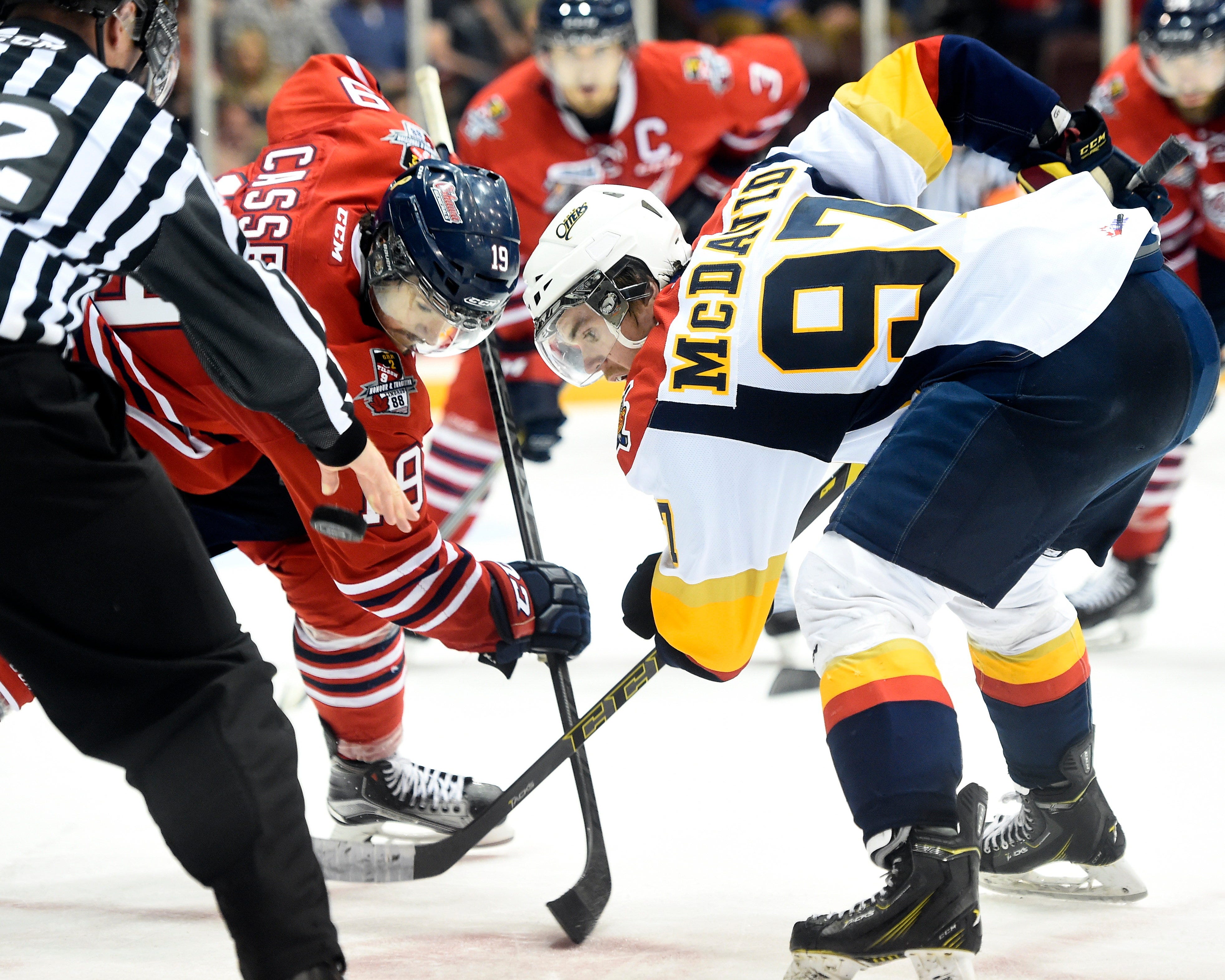
“It takes five guys on the ice to stop him,” Cassels explained. “Every time he gets the puck, your heart drops a little bit. You just have to skate as fast as you can, try to stay between him and the net, and hope he doesn’t make you look silly.”
Oshawa won the championship by turning every stride into a wrestling match.
“They kind of follow you around a bit,” McDavid noted after Game 5. “I didn’t take too many strides without someone right behind me or in front of me and they didn’t really let me touch the puck. It’s a credit to them. They did a good job.”
Even in defeat, he credited the opponent before acknowledging his own exhaustion.

The Heartbreak and the Hardware
On the ice in Oshawa, league officials handed McDavid the Wayne Gretzky 99 Award as playoff MVP.
He became only the second player in OHL history to capture the award from the losing team. Holding the silver trophy while the Generals celebrated their Memorial Cup berth on the opposite blue line remains one of junior hockey’s most poignant images.

“He’s a special player and a special person,” said Erie general manager Sherry Bassin. “A lot of players with skill wish they had character, and players with character wish they had ability. Connor has both. He didn’t care about trophies or point totals—he wanted to win with these guys. That’s why seeing him receive that award while our season ended was so emotional.”
“It’s an award that’s really for a team,” McDavid said quietly. “You wouldn’t be at this point without your teammates and all the coaches and everyone. I think it’s one of the most team-oriented awards there are. Obviously it means a lot getting your name on it, but at the same time, I owe it all to the boys.”
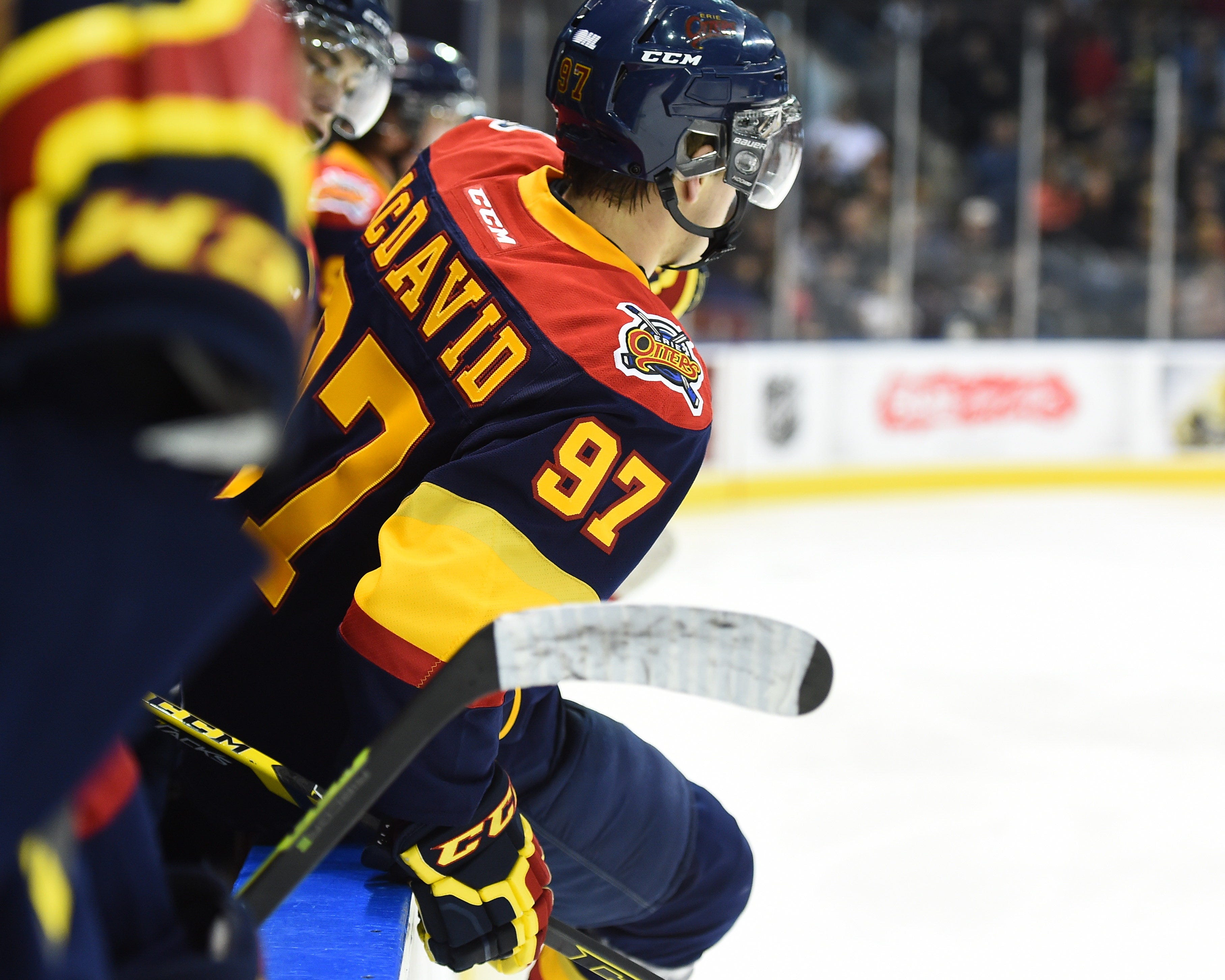
The Legacy of the Burden
Phenoms are remembered for the banners they hang or the highlights they manufacture.
Connor McDavid’s junior legacy is defined by something rarer: an unflinching capacity to carry the weight of an entire sport without ever looking burdened by it. He endured the sold-out scrutiny, transformed a cellar-dweller into a contender, and handled heartbreak with total grace.
The generational talent got him drafted first overall; the character under fire made him immortal in major junior hockey.
Photography by Aaron Bell/HockeyDocs.com