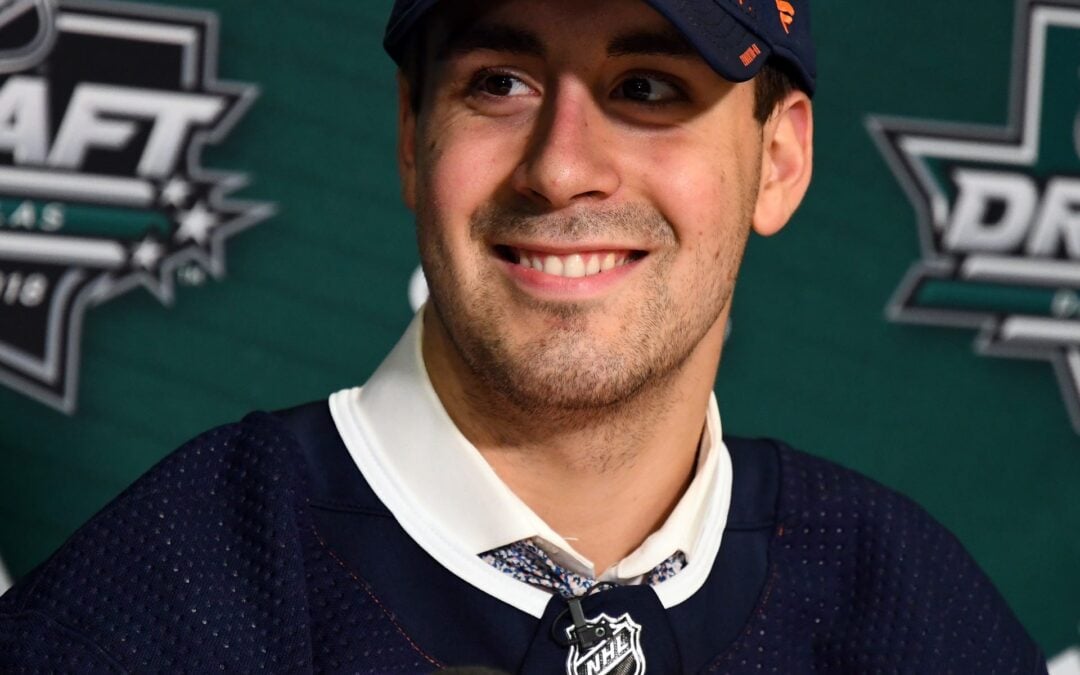
The debate surrounding Evan Bouchard has never been about what he can do when the puck finds his blade. From the moment he quarterbacked Dale Hunter’s London Knights as an Ontario Hockey League teenager, his passing vision and heavy right-shot release were undisputed.
The lingering question in Edmonton was always about the other side of the puck. Early in his NHL career, critics fixated on his upright skating posture and moments where his calm disposition looked like indifference. In a passionate Canadian market where every defensive breakdown is placed under a microscope, Bouchard absorbed the brunt of the scrutiny.
Early this season, however, Bouchard looks like a different player. The four goals and eight points stand out but the biggest change we’re seeing in the first three games of the season, Bouchard’s defensive gaps are tighter, the puck moves out of danger with ruthless precision, and his overall presence commands authority. If Bouchard has truly elevated his game into legitimate Norris Trophy contention, the Edmonton Oilers are no longer just an offensive juggernaut hoping to outscore their mistakes. They are holding the final piece required to finish their Stanley Cup chase.
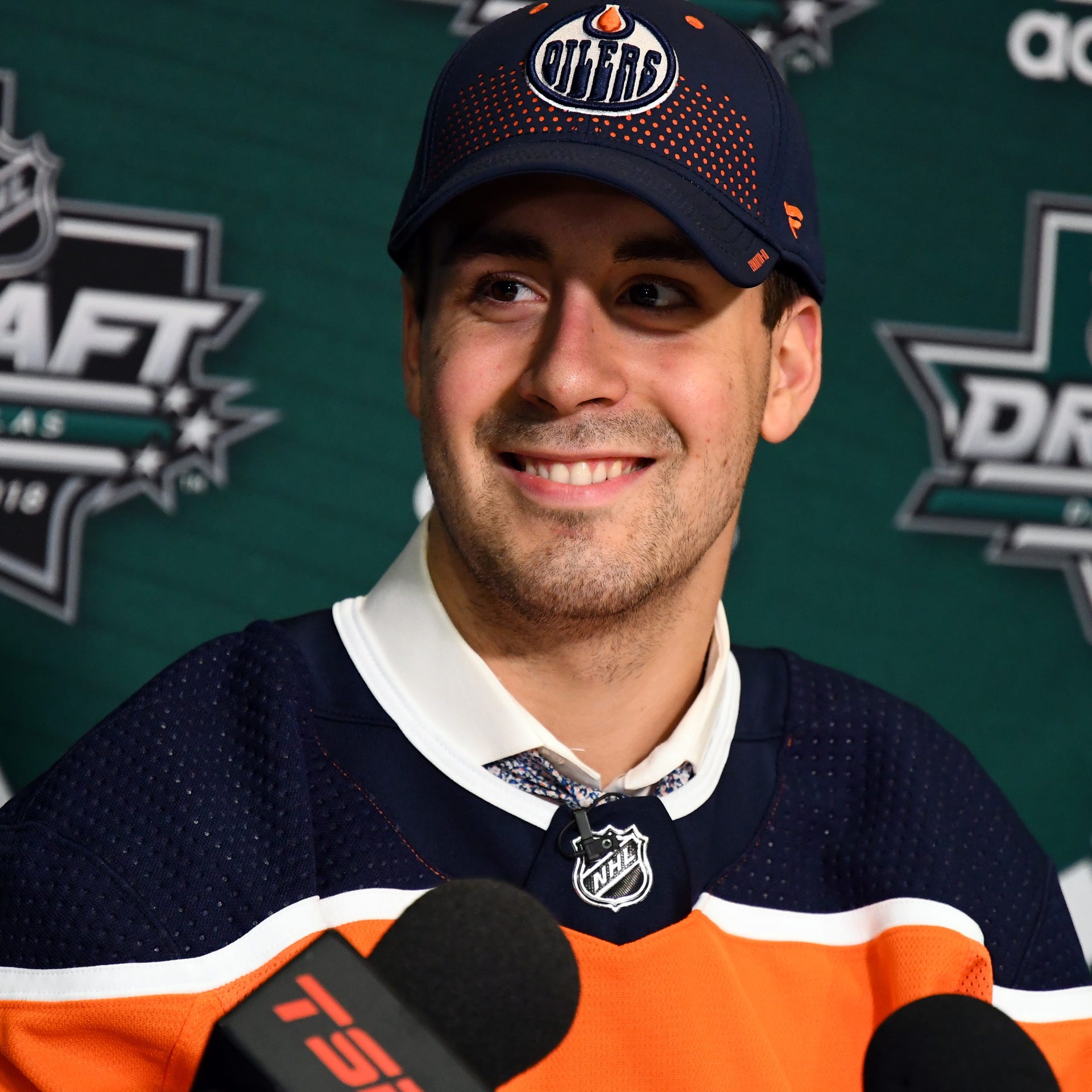
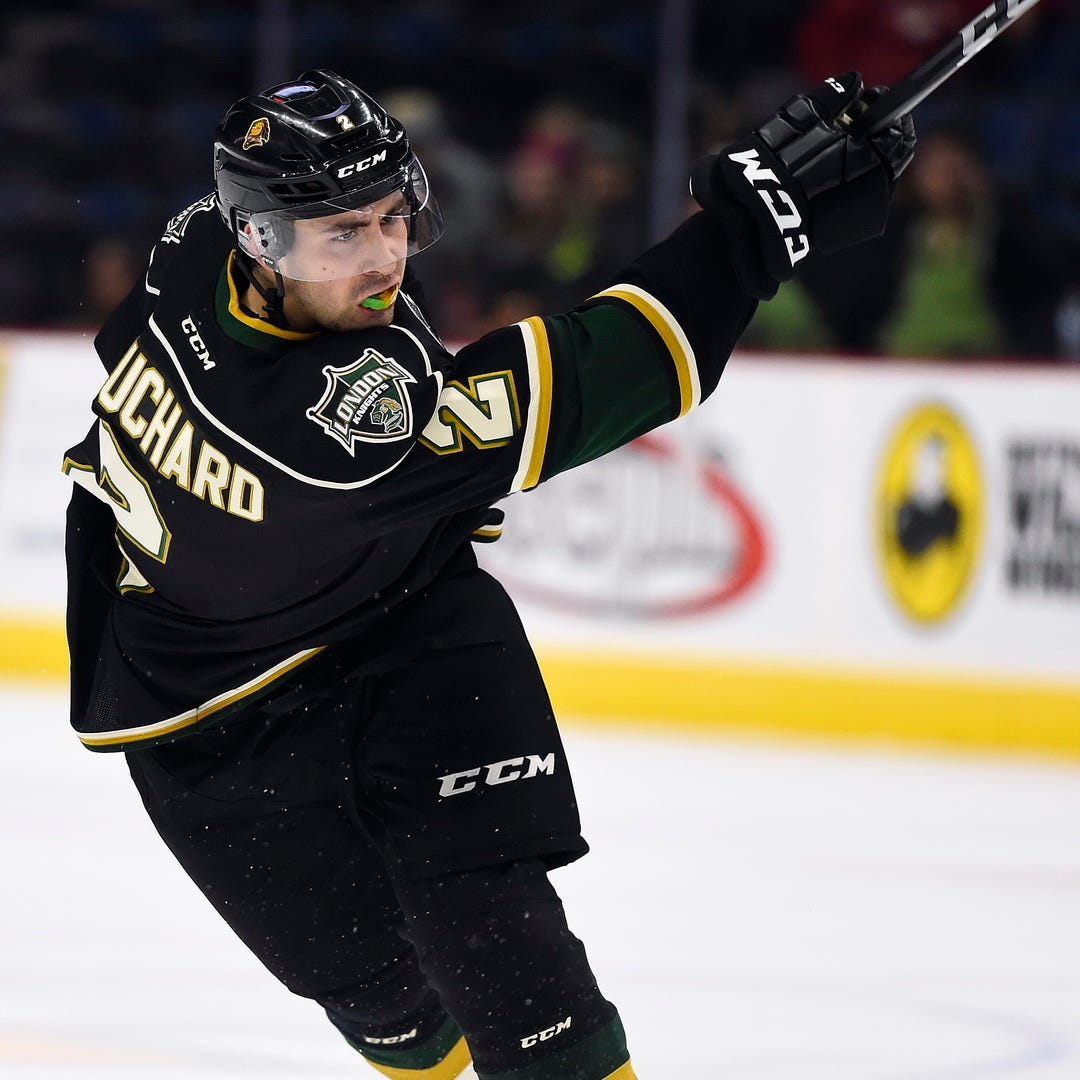
The Junior Illusion
Bouchard’s hockey sense has always misled onlookers who equate effective defending with frantic leg churn. Former coach Kris Knoblauch, who once game-planned against Bouchard when Knoblauch coached the Erie Otters in the OHL, remembered that exact deception:
“I was thinking, ‘All right, here’s this 16-year-old that’s getting a lot of ice time, probably more than I think he deserves.’ Tall, lanky, a little sleepy, maybe out of position a bit... let’s take advantage of it. But I was totally wrong. He was growing into his body, but he was an outstanding player, even at that age. What I saw from him as a 16-year-old playing in the Ontario Hockey League, I’m kind of seeing here.”
The upright posture and patient cadence were never flaws. In London, where Dale Hunter regularly deployed him north of 28 minutes a night, they were evidence of an elite processor conserving energy and reading the ice a second ahead of everyone else. Connor McDavid has repeatedly praised that mental edge, noting that Bouchard thinks the game at such an exceptionally high level.
The New Bench Influence: D.J. Smith and Paul McFarland
While Bouchard laid the groundwork alongside partner Mattias Ekholm, the arrival of associate coach D.J. Smith to oversee Edmonton’s defensive structure has accelerated his blue-line maturity.
Smith and Bouchard first developed an active working relationship with Team Canada at the IIHF World Championship. General manager Stan Bowman noted that Smith came away raving about Bouchard’s ceiling, stating that coaching him firsthand revealed a player who was even better than advertised.
Yet Smith’s familiarity with what makes a London Knights defenseman tick goes back much further. Long before joining Edmonton, Smith spent over a decade in the OHL’s Western Conference as both a player and coach with the Windsor Spitfires. In that division, nobody monitors Dale Hunter’s London program more closely than Windsor. Even as Smith made the jump to the NHL right as Bouchard entered the league in 2015, the pedigree, habit-building, and heavy-minute expectations of a Hunter-coached blue line were intimately familiar to him.
Beyond hockey pedigree, Smith provides the ultimate stylistic counterweight to Bouchard’s disposition. Smith is pure raw wattage—a vocal, in-your-face, commanding presence whose voice echoes throughout arenas. Bouchard, by contrast, is the consummate low-pulse operator.
For years, critics mistook that steady pulse and upright posture for apathy. But you cannot exist as a passive passenger under D.J. Smith. Even if the critique was purely optical, Smith’s relentless bench energy forces an active edge onto the ice. It is a clash of opposites that works: Smith’s fire drags the urgency out of Bouchard, while Bouchard’s icy composure prevents Edmonton’s transition from devolving into chaos.
Alongside assistant coach Paul McFarland—who coached directly against Bouchard while running the Kingston Frontenacs—Edmonton’s staff possesses deep institutional knowledge of the circuit where Bouchard’s foundation was poured.
Under Smith, the Oilers have instituted an aggressive, stick-first gap control system. Instead of retreating deep into Edmonton’s zone off the rush, Bouchard is stepping up firmly at the red line and offensive blue line. The change denies opponents clean entries and plays directly into Bouchard’s long reach and anticipation.
Redefining the Defensive Responsibility
Modern defense is fundamentally about puck denial and clean transition. When a defenseman hits forwards in stride, there is very little defending left to do.
Appearing on TSN’s OverDrive, Bouchard addressed how he studies his own game and where his defensive impact actually comes from:
“I’m not gonna go run around, be the big, heavy, hard defenseman that are usually tough to play against,” Bouchard said. “It’s (watching) a lot of game film. You watch yourself play, and you can see little things. If it’s gapping up a little better at the offensive blue line to make things easier, denying the blue line, little things like that.”
That self-awareness has flourished beside Ekholm, who provides vocal leadership and rush defense. “Playing with a guy like Ekky makes it a lot easier,” Bouchard said. “If I try to do something, make a mistake, he’s usually there to cover up for me. That helps to give you confidence in the D-zone.”
Ekholm acknowledged that the partnership required an honest appraisal of risk management: “You could see from the first day I got here he has the offence. But at times, and early on this year, too, we hurt our team a little bit on the defensive end. We had to fine-tune that. We’re valuing situations and judging when to go and when not.”
The Championship Piece
When the 2024 Norris Trophy finalists were announced, Bouchard was left off the three-man ballot. He did not hide his reaction.
“When I saw that come out, I was definitely upset a little bit,” Bouchard said. “Stings a little bit, but you know what? You get back at it, and you forget about it. There’s a lot of great defensemen in the league, so it’s kind of hard to pick between three of them.”
Edmonton does not need individual trophies to validate Bouchard’s worth. What they need is what he has delivered through the opening stretch of this season: a dominant, 25-minute pillar who tilts the ice at five-on-five, dictates special teams under McFarland’s power-play sets, and locks down entries under Smith’s guidance.
Bouchard framed the team’s reality simply: “With the Oilers, we score enough goals to win. It’s about keeping the puck out of our net. I think if we have a team-first mindset, protecting the puck, keeping it out of our net, then things will go up for us.”
If Bouchard maintains this standard, the debate about his defensive shortcomings is officially closed. The Oilers have had the game’s greatest forward talent for a decade. In Bouchard, they finally have the complete, top-pairing defenseman capable of carrying them over the finish line.
rchival Photography: Aaron Bell / Junior Hockey Giants
Enjoyed this look at Evan Bouchard’s developmental arc?
Explore the early OHL journeys and unseen photography of modern superstars in Junior Hockey Giants: Road to the NHL. Order your copy here