
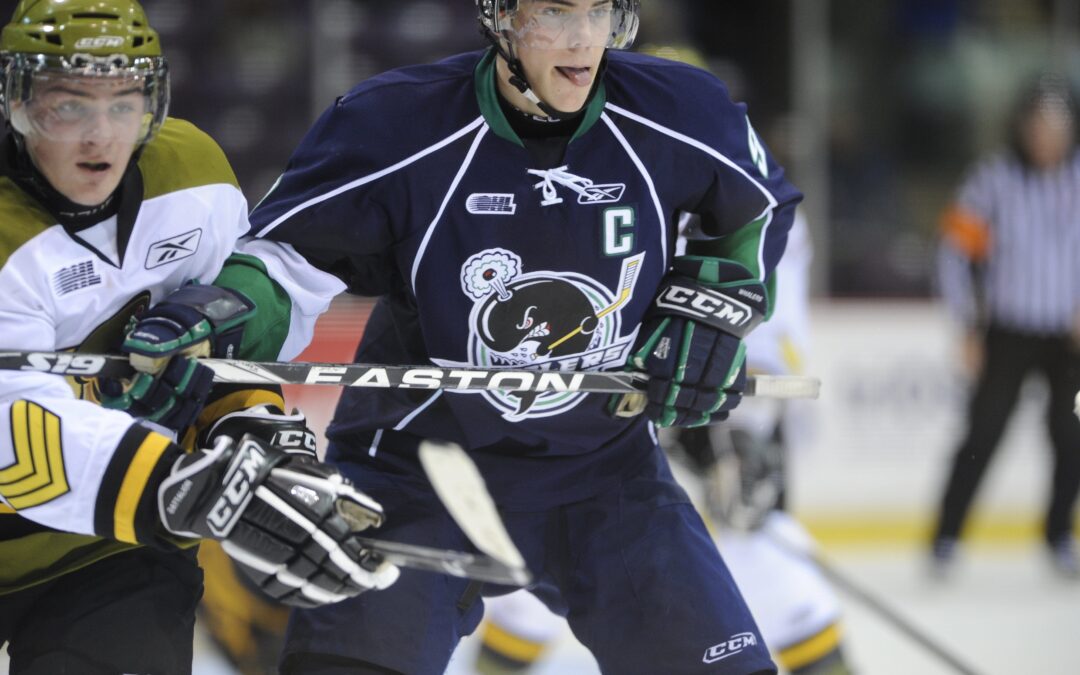

The puck sat dead at the center-ice dot, flanked by dozens of NHL scouts clutching clipboards inside Compuware Arena.
Tyler Seguin circled the circle. His shoulders hung loose, his face impassive beneath his visor, looking less like a teenager competing for the first overall pick in the world and more like someone taking an evening skate on an empty rink. Then the whistle blew. In two lateral strides, he collected a contested puck, drifted laterally across the blue line without breaking his stride, and wired a wrist shot through an iron-clad screen into the top corner.
Off the ice, he answered flashbulbs and scouting questions with an easy, surfer-cool grin.

On the ice, he executed every sequence with ruthless, surgical precision.
That contradiction—the effortless glider who secretly outworked entire systems—became the engine of his entire junior hockey trajectory.
Part 1: Household Pedigree and Rink-Rat Obsession
Seguin did not stumble into the game by accident.
He was raised in Brampton and Whitby in an athletic household where hockey was the primary language. His father, Paul Seguin, played collegiate hockey at the University of Vermont, while his mother, Jackie, had been an accomplished athlete herself. The baseline technical standard was set early on their backyard surfaces: soft hands, clean puck reception, and constant head-up spatial awareness.
He studied the game obsessively rather than just playing it.
“Right now, my life is hockey,” Seguin once stated regarding his early competitive focus. “I try to think about something different, but always it’s hockey”.
Where other kids chased body checks along the boards, Seguin pursued empty ice. He spent hours drilling lateral edge control, figuring out how to let the puck glide along his blade so that defenders could never time their poke checks.
Part 2: The Toronto Young Nats and the Twin-Engine Attack
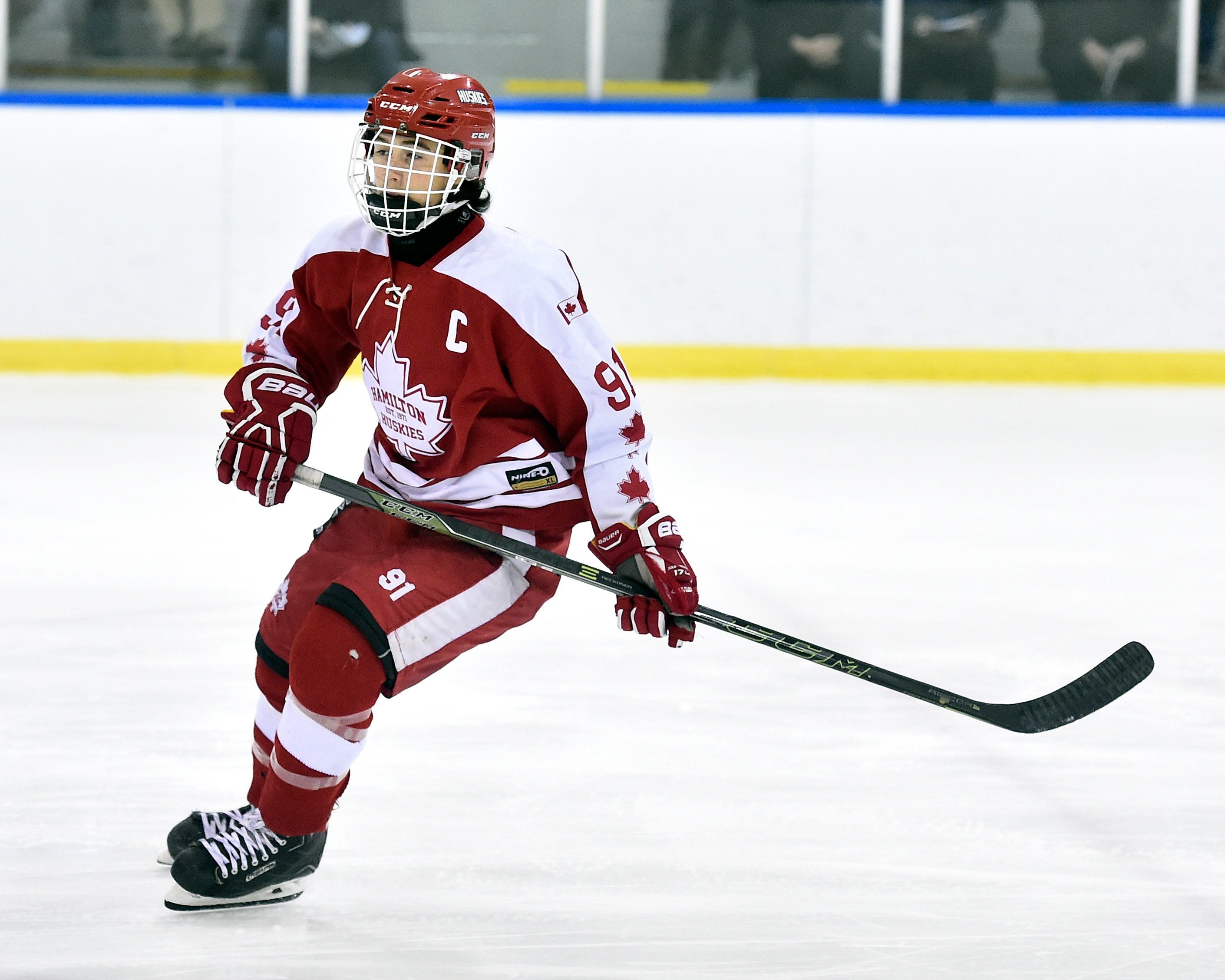
By the time he entered the Greater Toronto Hockey League (GTHL) with the Toronto Young Nationals, his physical profile caught up to his vision.
Playing under former NHL 50-goal scorer Rick Vaive, Seguin was placed directly under pro-style demands. Vaive gave him the freedom to create off the rush but refused to tolerate careless defensive lapses.
The Young Nats boasted a devastating one-two punch: Seguin driving play through the middle, and lethal finisher Jeff Skinner terrorizing goaltenders off the wing.
Skinner brought unmatched edge work from his figure skating background and an innate nose for the net, while Seguin acted as the distributor who could manipulate coverage at full tilt. Together, they turned the Young Nats into an offensive engine that dictated tempo across every minor midget tournament in Ontario.
He didn’t just score goals; he unlocked his linemates.
“I also get a lot of kudos for being a player who can make the other players around me better, be a playmaker and also score when my team needs it,” Seguin said to the Calgary Herald while reflecting on the role he carved out during his formative draft year.
The tandem was impossible for scouts to ignore. When the 2008 OHL Priority Selection arrived, both went off the board in the opening round—Seguin at 9th overall to the Plymouth Whalers, and Skinner at 20th overall to the Kitchener Rangers.
Two years later, that minor midget connection repeated on the game’s biggest stage: Seguin went second overall to Boston, while Skinner went seventh to Carolina, stamping them as two of the most dynamic first-round picks to emerge from the same GTHL locker room.
Part 3: Crossing the Border to Plymouth
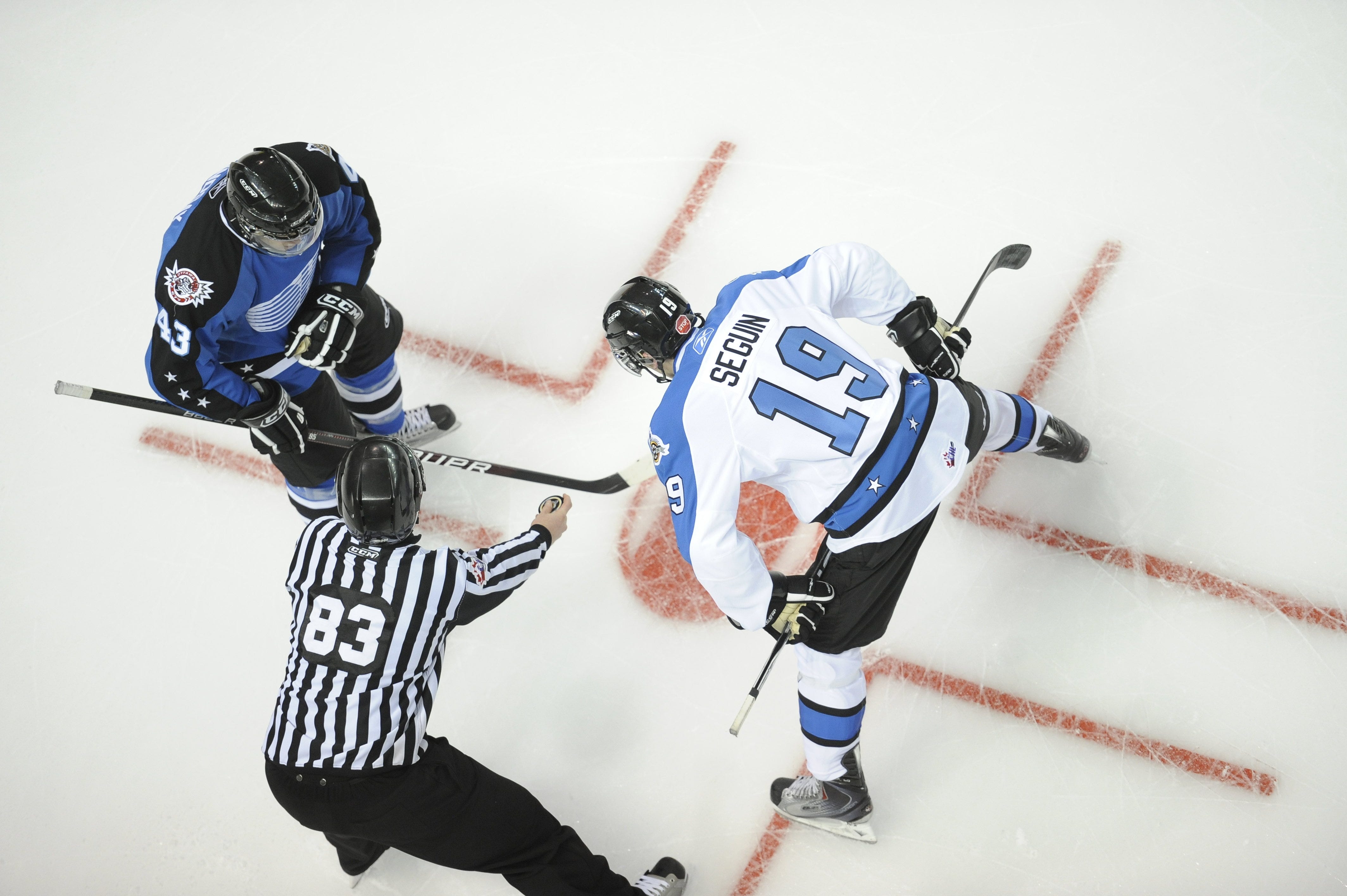
Moving to Plymouth meant foregoing NCAA eligibility and committing immediately to the major-junior grind.
The start was far from seamless. Seguin managed only a single goal over his first 17 games in a Whalers sweater. Opposing junior defensemen closed his space faster, punishing him every time he tried to pull the puck through a crowded neutral zone.
The turning point arrived when Plymouth made an early-season bench change, handing head coaching duties to Mike Vellucci.
Vellucci placed Seguin into premium offensive situations while holding him accountable along the 200-foot sheet. Seguin adjusted his entry angles, started firing the puck off his front foot, and finished his rookie campaign with 67 points in 61 games.
The initial hesitation had vanished. Plymouth was officially his team.
Part 4: The 106-Point Explosion and Draft Day Drama
The summer before the 2009–10 season, Seguin completely reconstructed his stride and upper-body power.
The result was an offensive campaign that turned the CHL upside down. Seguin dominated from the opening weekend, racking up 48 goals and 58 assists for 106 points in 63 games, capturing both the Eddie Powers Memorial Trophy as top scorer and the Red Tilson Trophy as the OHL’s Most Outstanding Player.
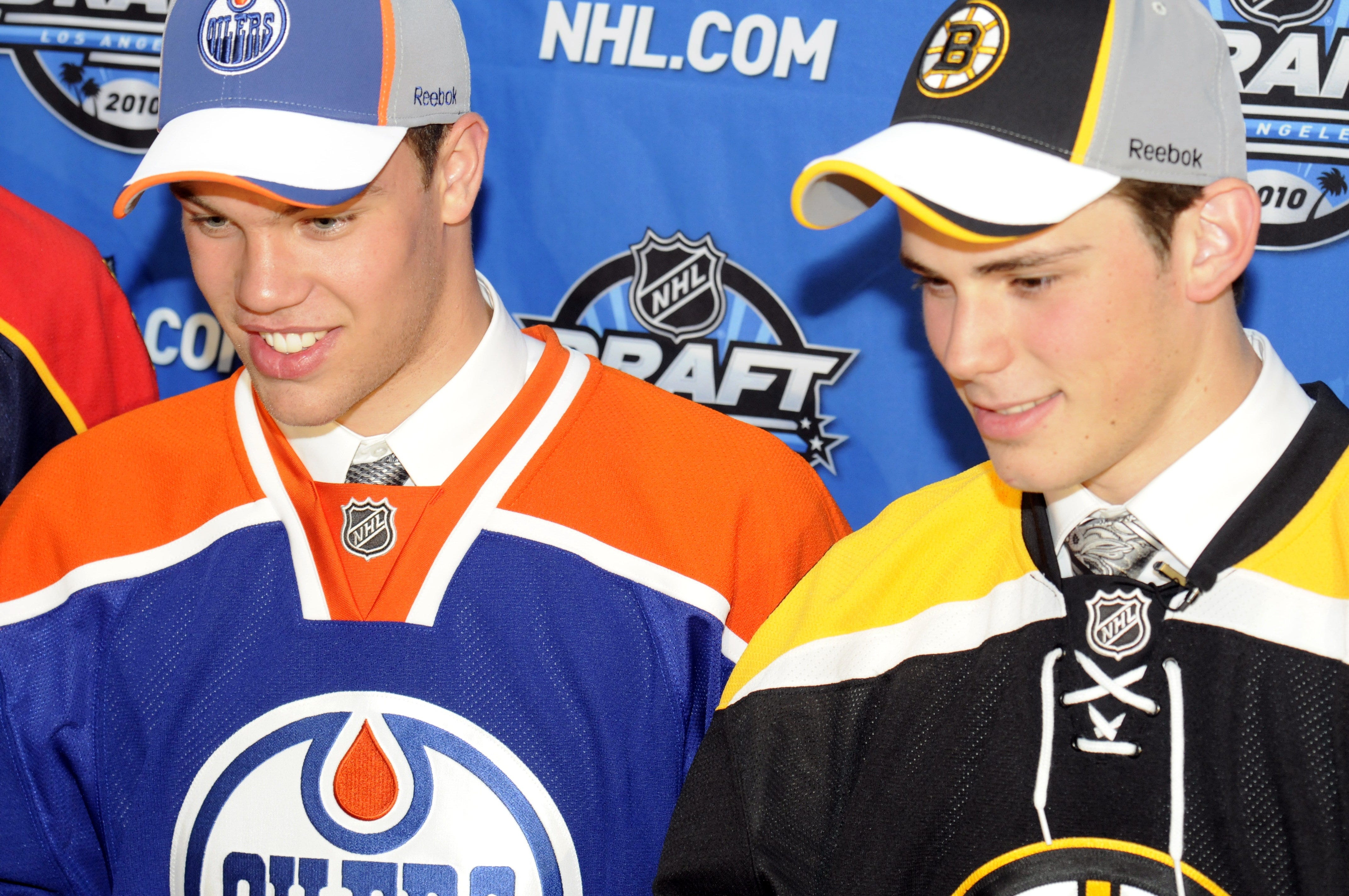
His rise turned the 2010 NHL Entry Draft into a relentless head-to-head debate: Tyler Seguin versus Windsor Spitfires powerhouse Taylor Hall.
Where Hall was a freight train of straight-line power, Seguin was deception in motion.
“As an opponent, Taylor [Hall] is a great player,” Seguin noted as draft scrutiny peaked. “He’s a different player, though. I’m a centerman and he’s a winger. He can fly and plays a different style than I do. I think the media has made it out like we’re archenemies, but that’s not true”.
“What gets underrated in Seguin is his skating — it’s great,” one veteran NHL scout observed during that spring’s evaluation window. “Hall has world-class speed, but I grade them both as being ‘5’ skaters; you can’t do better than that”.
When Edmonton selected Hall first overall in Los Angeles, the Boston Bruins sprinted to the microphone at number two.
The kid who made dominance look casual had crossed the junior stage as an undeniable giant.
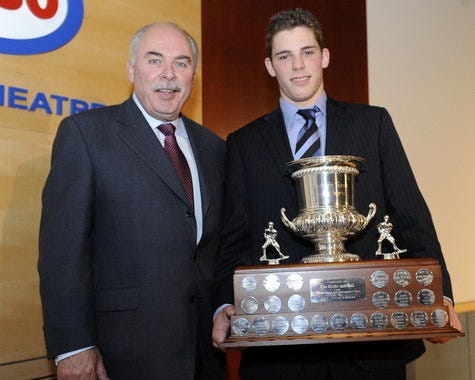
Photos: Aaron Bell/OHL Images