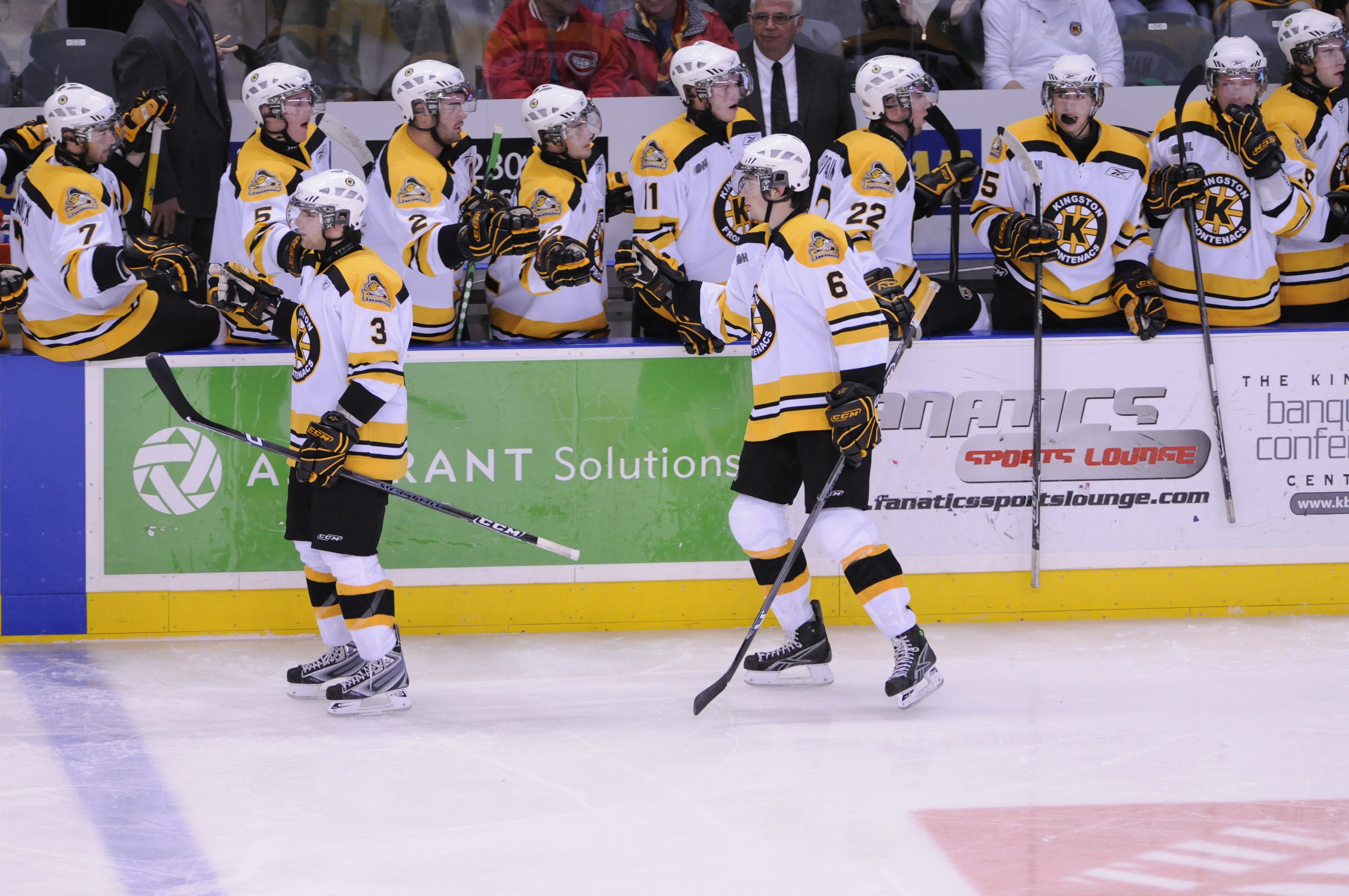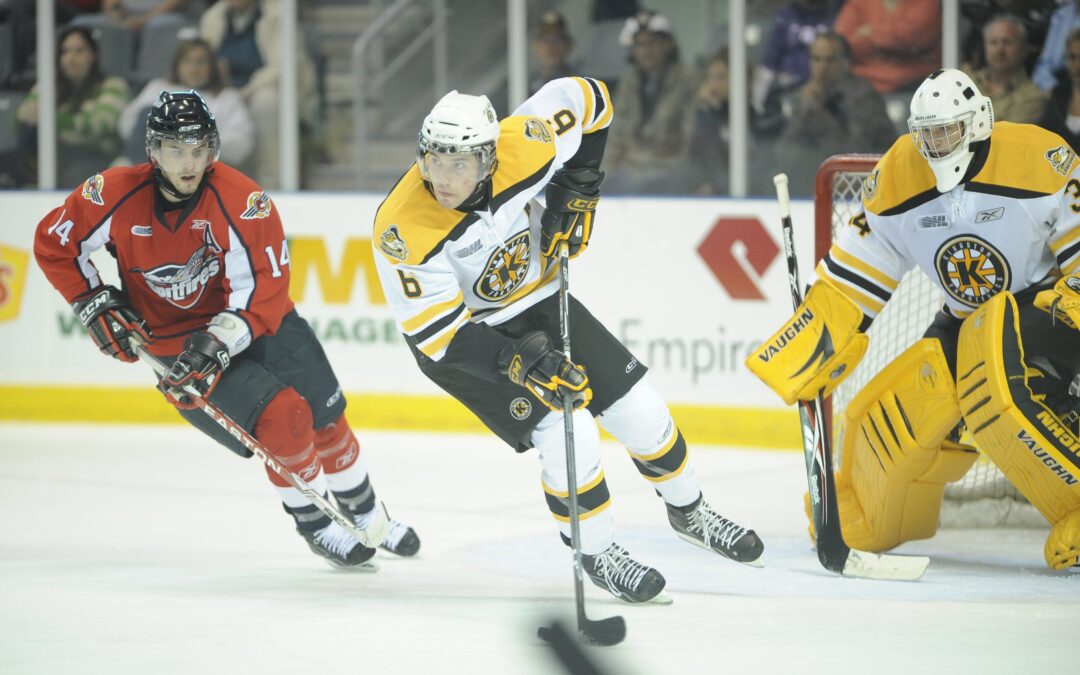
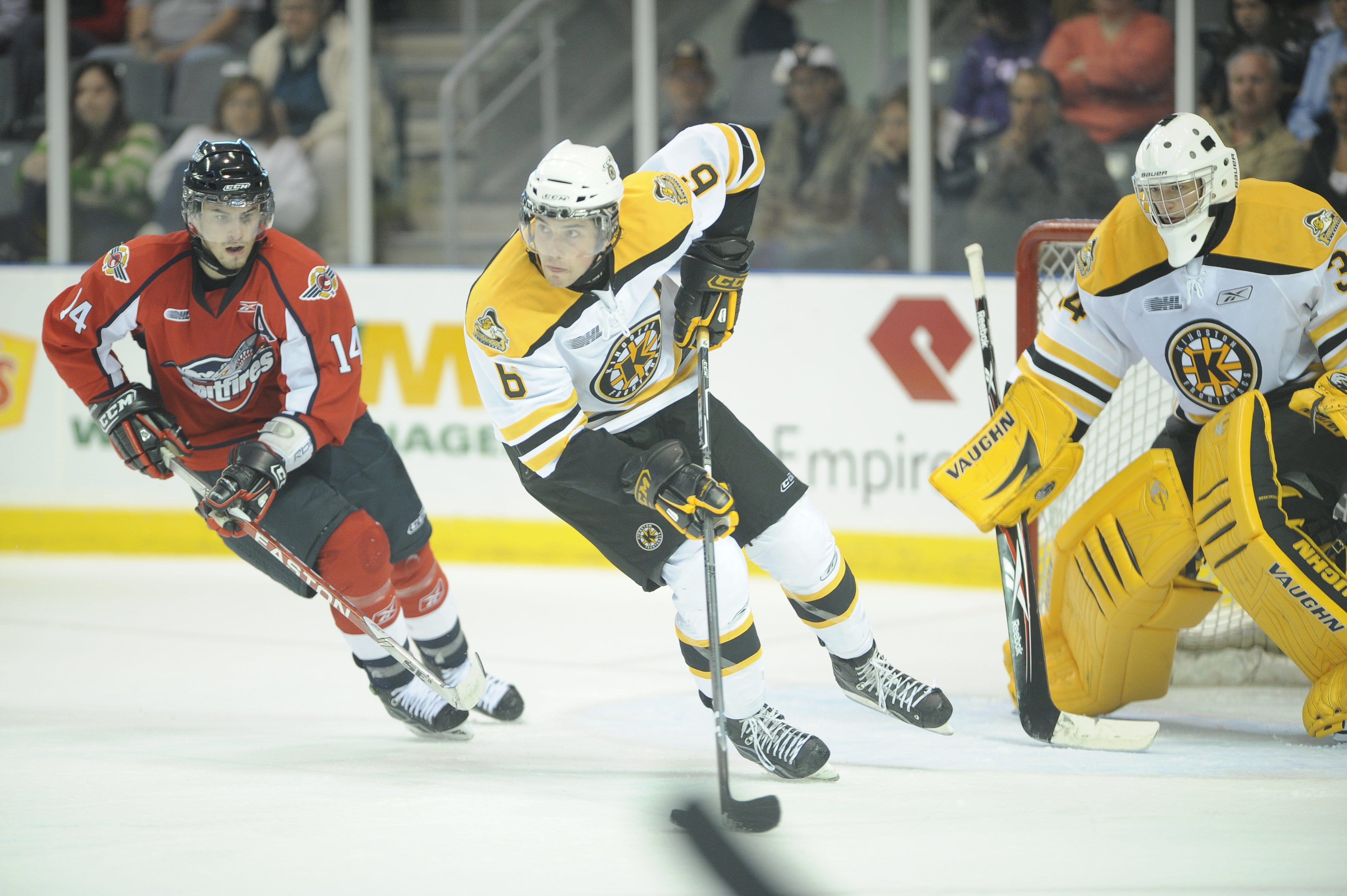
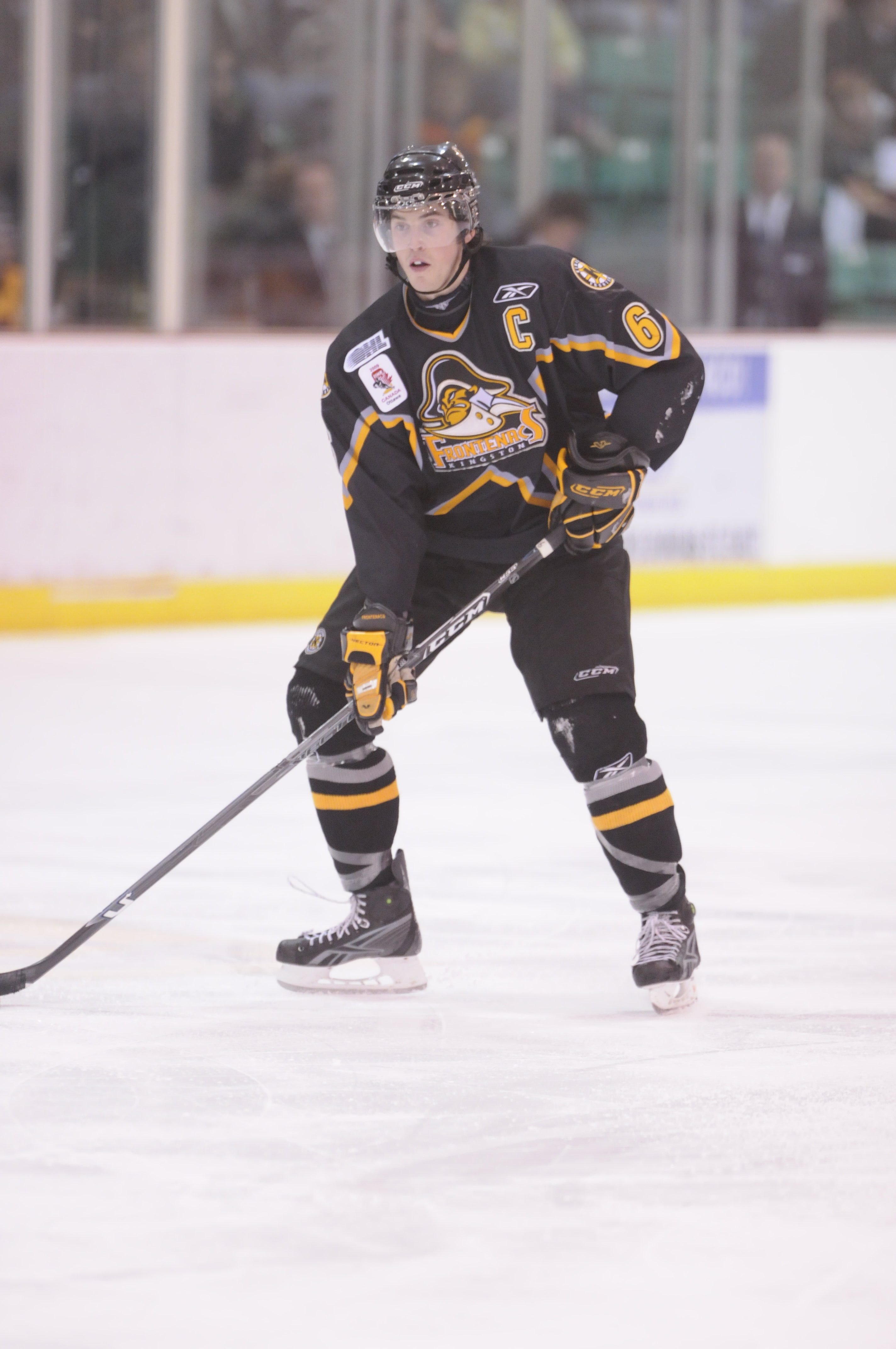
The whistle blew along the boards at Yardmen Arena, and the scrum formed before the puck settled. Erik Gudbranson planted his skates outside the crease. He stood six-foot-four in Frontenacs black and gold. He was 16 years old.
Kingston general manager Larry Mavety had already warned the rookie defenceman about Belleville.
“Mav telling me about what happened between Belleville and them the prior year... when you had the back-to-back brawls,” Gudbranson said. “I remember thinking coming to Kingston like, I don’t know how to fight. I got to figure this out because it looks like this is going to happen when we go to Belleville”.
The physical tax arrived early. He absorbed the blows and delivered his own.

Minor Hockey Roots in Orléans
Gudbranson grew up in Orléans, outside Ottawa. His earliest hockey memory centred on a trip to the Corel Centre to watch Steve Yzerman score against the Ottawa Senators.
“That was the coolest thing I’ve ever seen,” Gudbranson said. “I guess at that age I was ready to dedicate my life to it”.
He split time between competitive soccer as a goalkeeper and minor hockey with the Gloucester association until age 14. At 15, he stepped away from soccer and entered the weight room.
A grassroots reorganization changed Ottawa hockey before the 2007-08 season. Area organizers merged 12 double-A teams into five triple-A clubs to compete against Toronto programs. Gudbranson joined the Ottawa Jr. 67’s under-16 squad, scoring 25 points in 28 games.
Scouts took notice.
Kingston Selection and Family Grounding
His parents favoured the American college route. Gudbranson preferred the Ontario Hockey League, having spent his youth riding municipal buses to Lansdowne Park to watch the Ottawa 67’s.
“I remember telling my mom, I have to do this,” Gudbranson said. “I have to go see how I compare to these guys”.
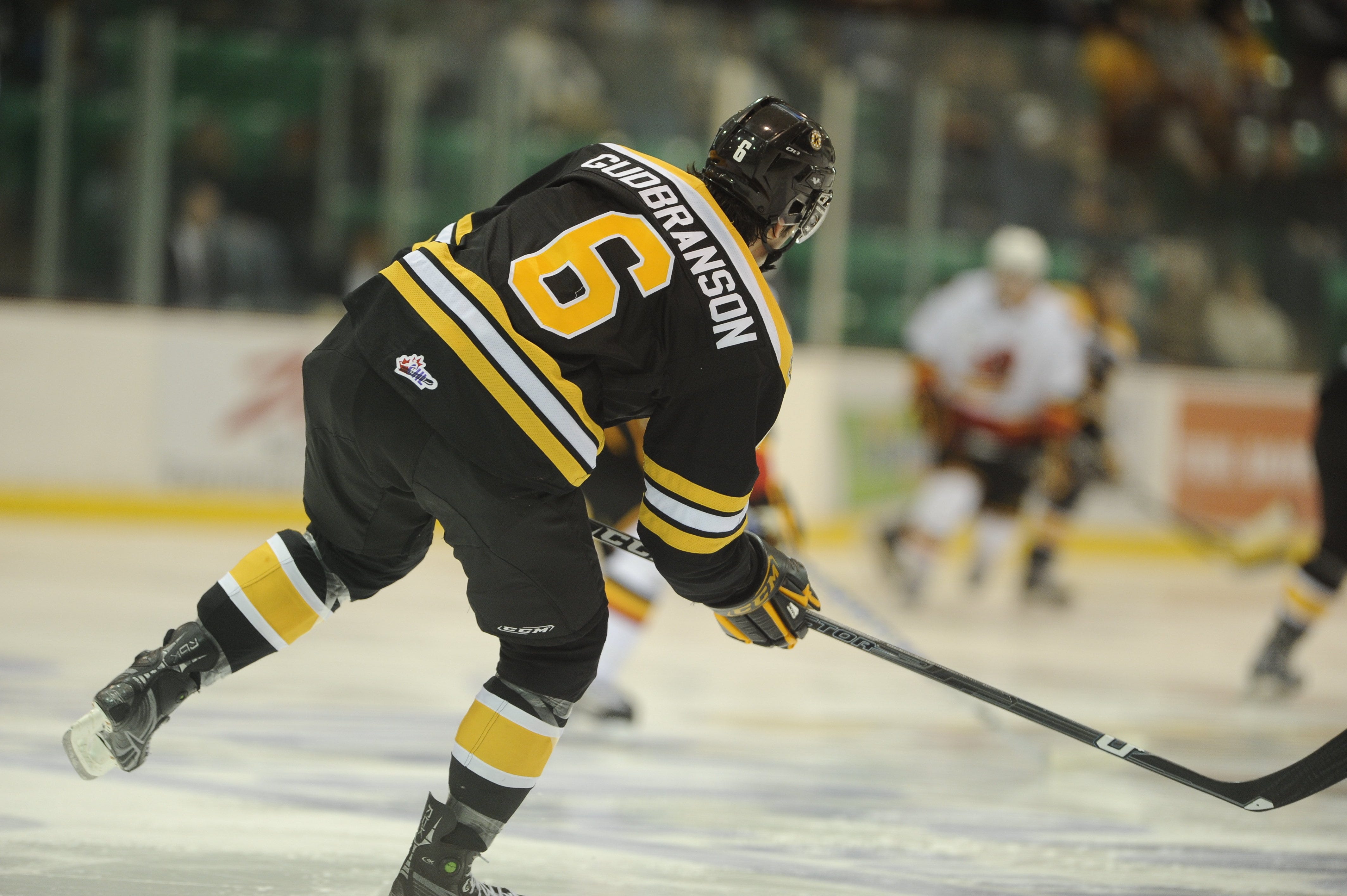
The Kingston Frontenacs selected him fourth overall in the 2008 OHL Priority Selection. He took sweater No. 6 at the brand-new K-Rock Centre. Head coach Doug Gilmour took over the bench two months into his rookie season.
His composure on the ice reflected reality at home. Before his junior career began, doctors diagnosed his younger brother Dennis with acute myeloid leukemia. The emergency reshuffled every priority in the household.
“That was definitely a cornerstone for maturity for all the siblings in our family,” Gudbranson said. “We all grew up pretty quickly when Dennis was sick”.
Dennis survived after a stem-cell transplant.
Defensive Deployment Under Gilmour
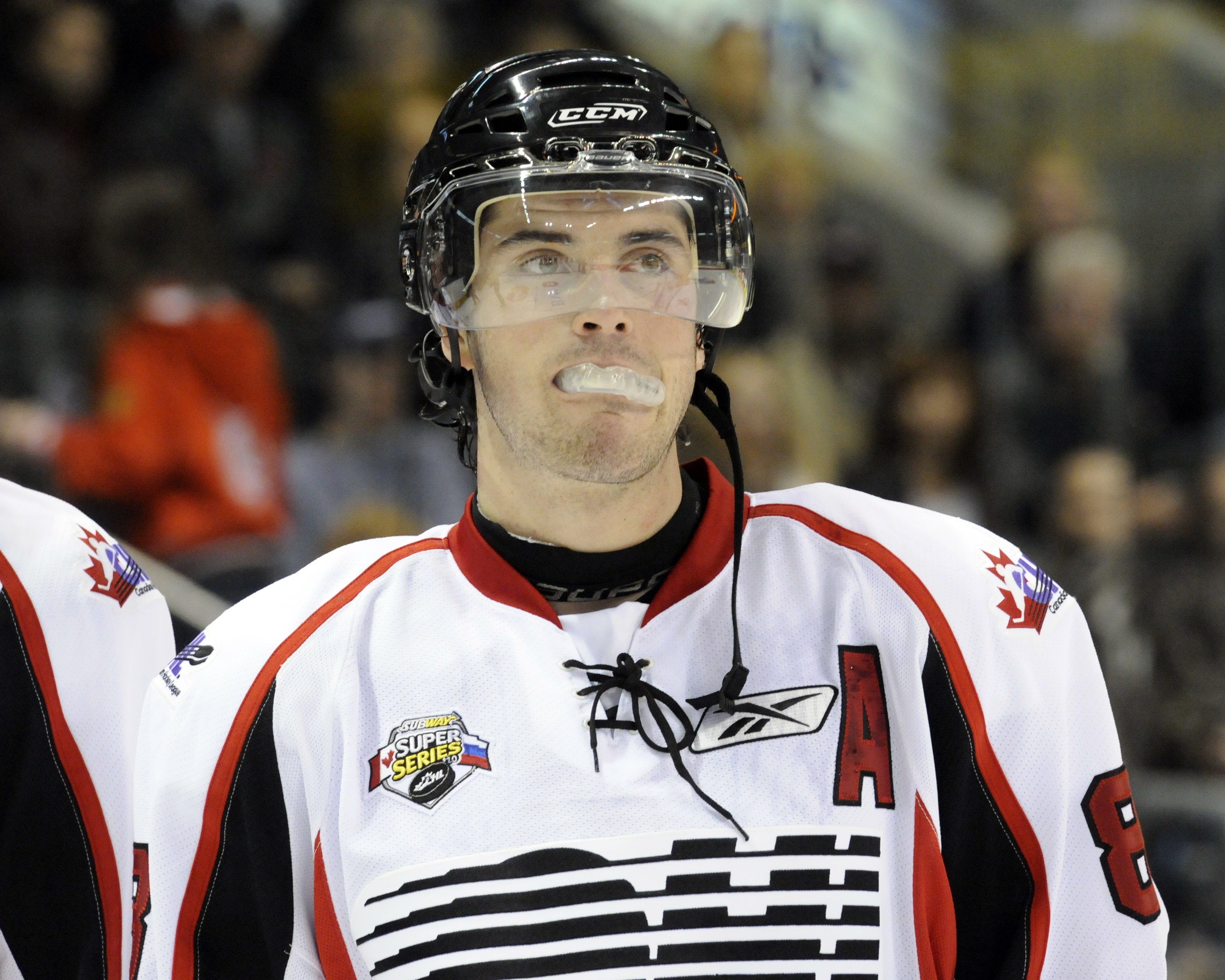
Kingston gave Gudbranson heavy defensive assignments from the start. He skated in 63 games, posted 22 points, and served 69 penalty minutes in his rookie year.
In his second season, he earned an alternate captain’s letter at 17. Gilmour used him against top scorers across the league, matching him against Taylor Hall and Devante Smith-Pelly.
Gilmour kept the instruction direct.
“Dougie was really good,” Gudbranson said. “Dougie was just like, keep playing hard, man. They’ll see you. You keep playing the way you are, they’ll see you”.
Mononucleosis and a knee injury cost him games, but he led the team with a plus-11 rating across 41 appearances.
“In terms of this season on an individual basis, it’s been an up and down year,” Gudbranson said in March 2010. “I’ve had to battle through some injuries and a little illness there. From a team basis, we’ve come together as a group”.
The Sibling Blue Line and Playoff Reality
Postseason success proved elusive. The Brampton Battalion eliminated Kingston in seven games in 2010.
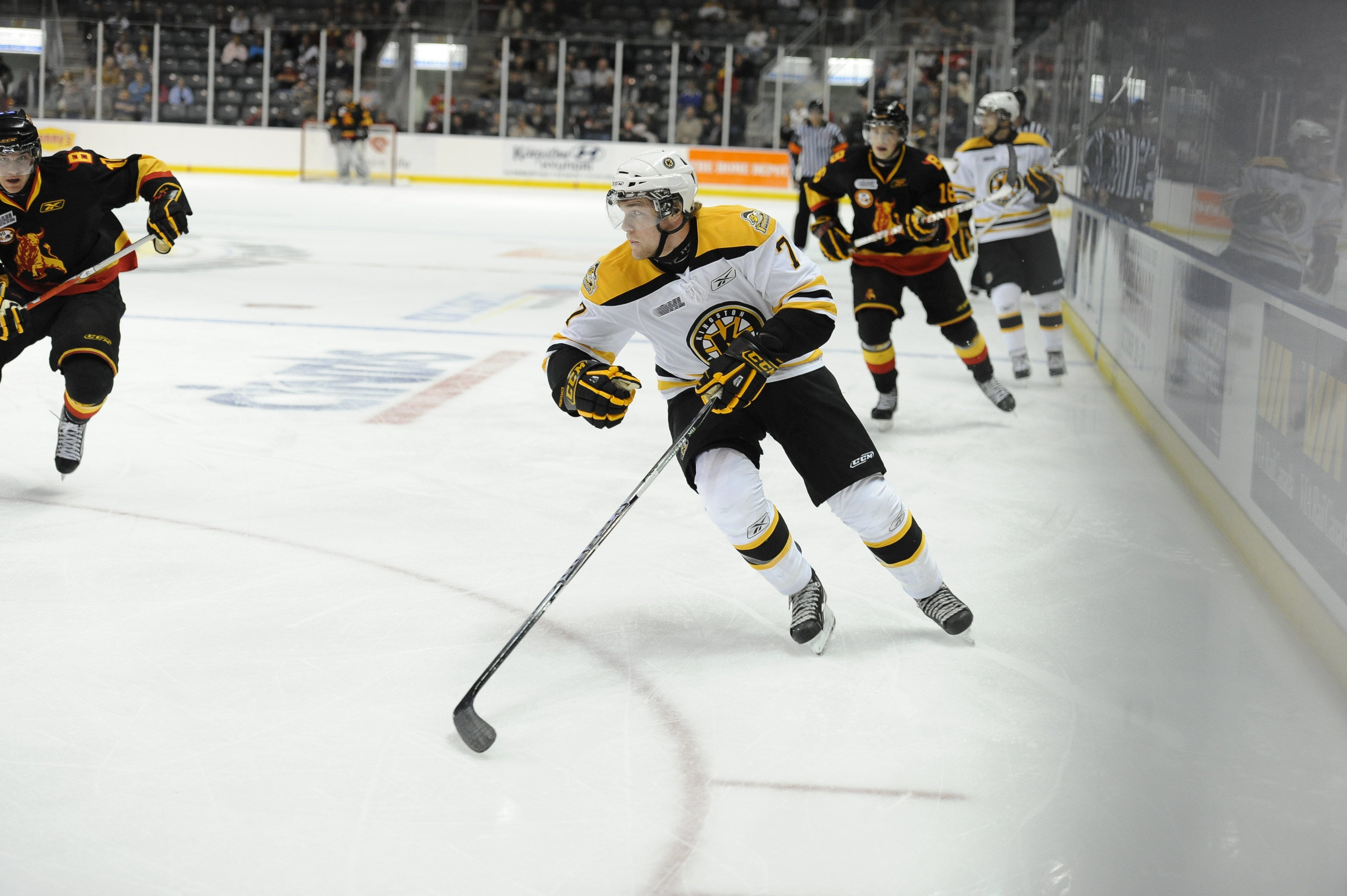
The following winter brought his brother Alex to Kingston as a first-round selection. The two shared an apartment and ice time on the blue line.
“Playing with your brother, I never knew that that was a possibility,” Gudbranson said. “It was just so fun. It was so competitive”.
Gilmour leaned on both defencemen down the stretch.
“You can just tell the confidence they both have,” Gilmour said. “Little Guddy, that was one of his best games he’s played all year. And Erik, he’s just a force out there all the time”.
Goaltender Philipp Grubauer suffered an injury in the 2011 playoffs. The Oshawa Generals eliminated Kingston in five games, despite the Frontenacs controlling the shot counts.
That loss matched the heartbreak of the 2011 World Junior Championship in Buffalo, where Canada lost gold in the third period.
“I think the biggest thing is the bitter taste in my mouth,” Gudbranson said. “I never want to taste that again”.
The Florida Pick and Professional Baseline
NHL Central Scouting ranked Gudbranson near the top of the draft class all year. Evaluators prioritized his size, physical play, and puck movement.
Director of Central Scouting E.J. McGuire did not mince words when comparing him to NHL stars.
“Chris Pronger is mean and will hit you; Gudbranson will hit you and fight you,” McGuire said.
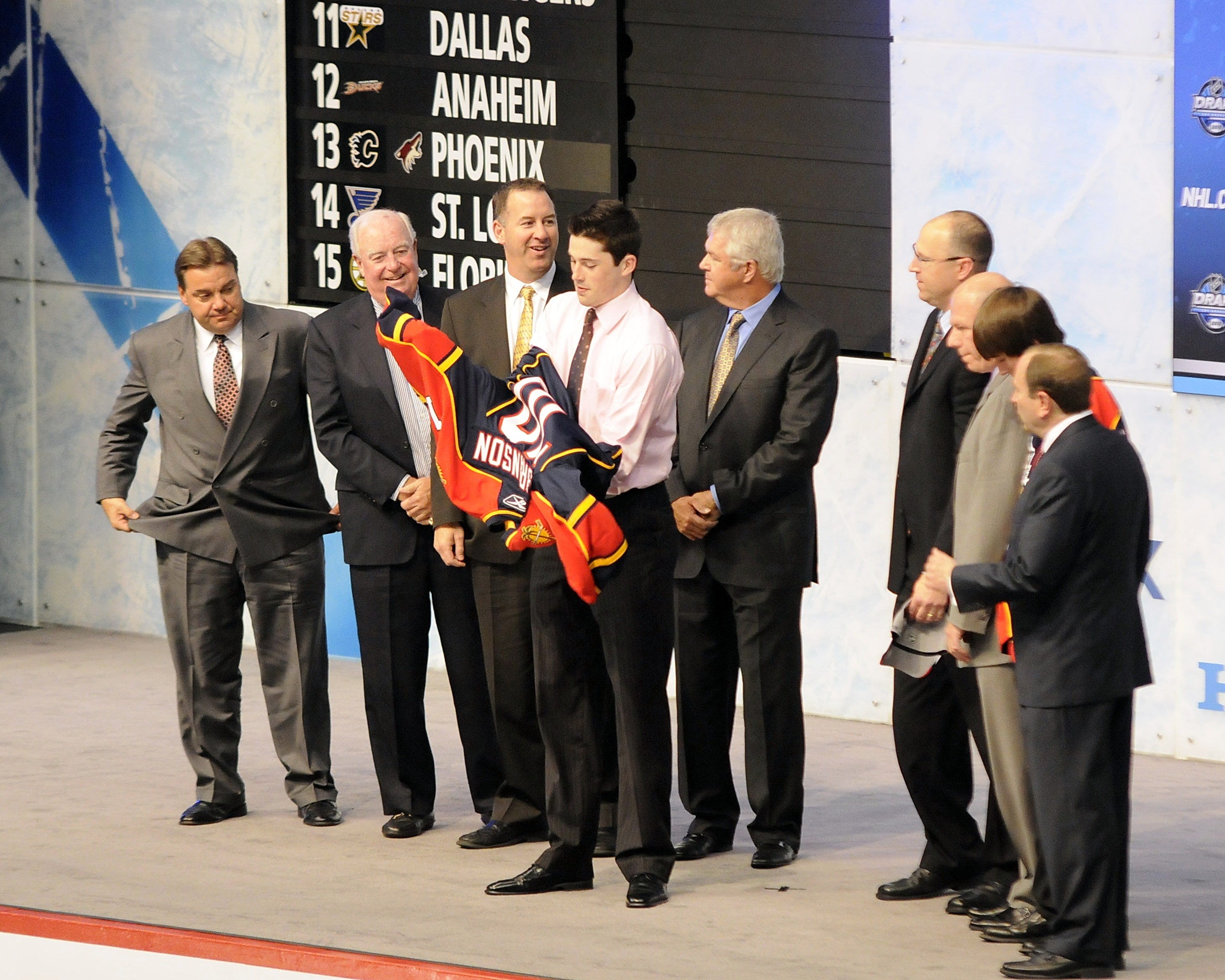
The Florida Panthers drafted him third overall in Los Angeles. Before boarding the flight to California, his mother made him attend his high school graduation ceremony in Ontario, forcing him to skip early events with the Los Angeles Angels.
Panthers general manager Dale Tallon completed his signing the following July.
“Erik is one of our top draft picks that we are pleased to have signed,” Tallon said. “He has tremendous size, strength, and character, and we look forward to watching his continued growth”.
Gudbranson arrived at Panthers training camp that fall. The speed of the NHL game made sense immediately.
“When you’re looking for a guy as a defenseman to break the puck out and you’re looking for that middle option, like he’s already there and he’s ready,” Gudbranson said. “It was like, this is actually kind of easier. You just gotta get to your spots and be in the correct position, handle the puck well, and you’re gonna be okay”.
Photos: Aaron Bell/OHL Images
HockeyDocs documents the defining eras, developmental turning points, and untold personal histories of Canadian junior hockey. Subscribe below to receive original archival features and primary-source retrospectives delivered directly to your inbox.