


He never saw it coming.
Ryan Ellis stepped up through the slot, lowered his center of gravity, and exploded into Taylor Hall’s chest with a textbook, bone-crushing open-ice hit that flipped the former first-overall pick onto his back and sent his stick flying into the air.
It happened on an October night in Edmonton in 2014, but the timing was forged years earlier.
Nobody in the hockey world had seen Ryan Ellis execute that exact defensive-zone ambush more times than Taylor Hall. They had shared a bench through back-to-back Memorial Cup titles in Windsor. Yet even with all that shared history, Hall still got caught by surprise.
Standing 5-foot-9 in an era where junior scouts judged blueliners by height and reach, Ellis looked unassuming.
On the ice, he was a heat-seeking missile.
1. Brains, Timing, and the Open-Ice Ambush
Windsor has always been a lunch-pail town that loves its hockey with a side of bruised knuckles and black tape.
When fans packed the barn, they expected heavy forechecks, towering blueliners, and overt intimidation. The conventional wisdom of the late 2000s insisted that an undersized defenseman had to survive strictly by avoiding contact, staying on the perimeter, and chipping pucks away from danger.
Ellis broke that rule completely.
“He’s half the man, maybe,” said Windsor Spitfires general manager Warren Rychel during Ellis’s draft year. “It’s something that will have to be addressed, obviously, but I think Ryan Ellis is the player he is because he’s smart, and he gets ahead of himself. He gets away with smarts, and by dodging hits. He’s done it here in three years in our league, and he’s very good at using his own net to protect himself.”
Yet dodging hits was only half of his identity. The other half was calculated impact.
“I’ve heard all sorts of things about my size,” Ellis stated plainly when scouts questioned whether his frame could withstand the physical toll of junior hockey.
His low center of gravity became an offensive and defensive weapon. Forwards assumed they had the lane until Ellis closed the gap in an instant, using pure timing and positioning to drop opponents who outweighed him by thirty pounds.

2. The Complete Defensive Package
Casual observers outside the OHL assumed Ellis was purely an offensive quarterback, someone who padded stats on an elite power play while relying on high-flying transition systems to stay above water.
Spitfires assistant coach D.J. Smith knew better.
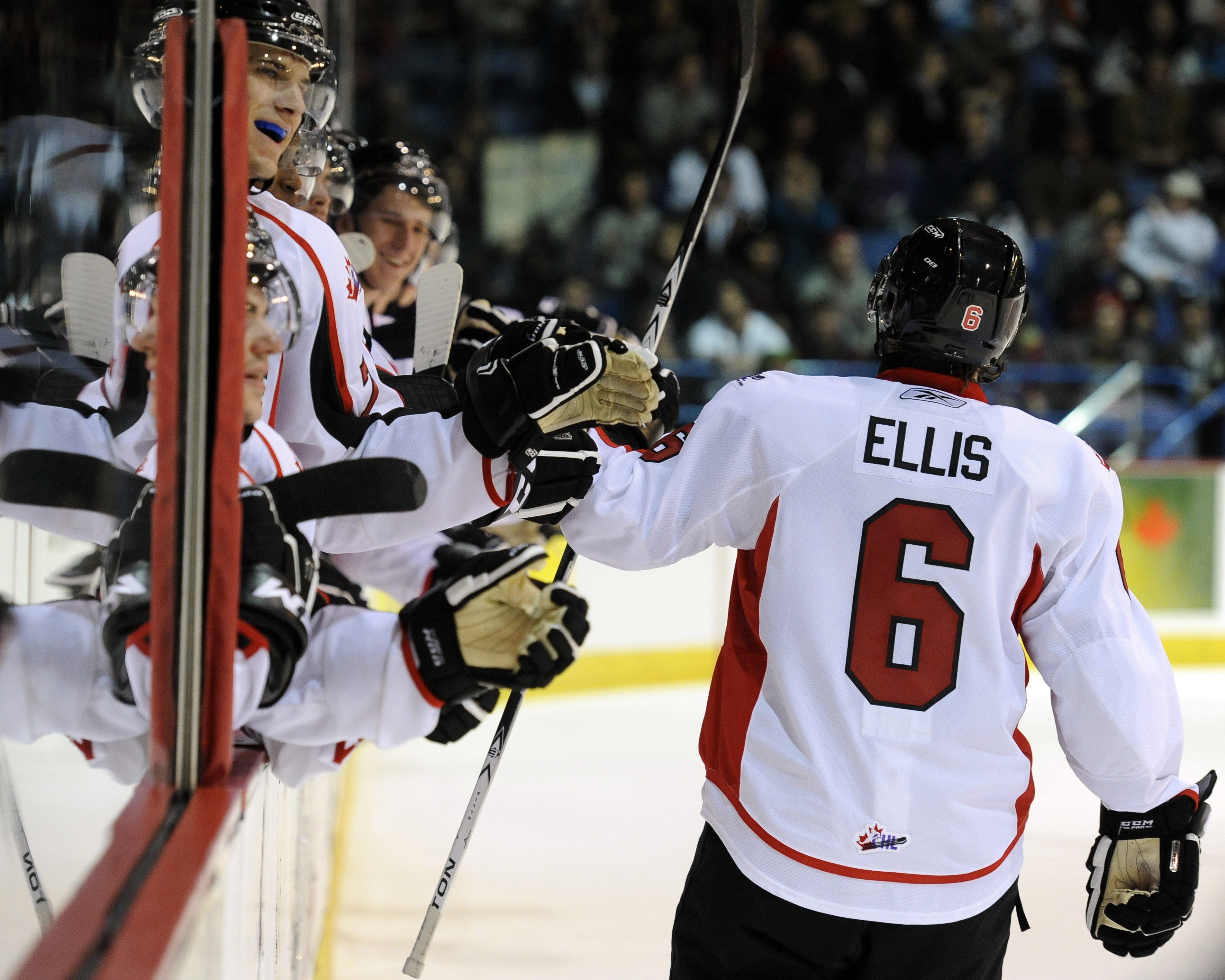
Whenever an opposing top line got rolling and pinned Windsor in its own end, Smith didn’t shelter his dynamic blueliner. He called number 6 over the boards.
“When the going gets tough for the Windsor Spitfires, we use him as the shut-down guy,” Smith explained. “So there’s no hiding Ryan Ellis. He’s going to be a player no matter where he goes.”
Head coach Bob Boughner echoed that same trust when Ellis was awarded the Max Kaminsky Trophy as the league’s top defenceman:
“It has been great to watch him develop,” said Boughner. “He possesses great natural skill, a hard shot, and he is just a really complete player. He is also our shut-down defenceman. He is a great student and teammate off the ice as well.”
Opposing benches agreed. In the Western Conference coaches’ poll, they voted him the smartest player in the league—a recognition won not just with jaw-dropping offensive numbers, but with suffocating gap control, devastating hits, and defensive awareness.
3. Holding the Line in 2010–11
By the autumn of 2010, the dynastic core that hoisted back-to-back Memorial Cups had almost entirely walked out the door.
Taylor Hall graduated to the NHL. Adam Henrique, Eric Wellwood, and Cam Fowler moved into professional systems. The powerhouse roster that had run roughshod over the Canadian Hockey League was stripped down to a younger, unproven squad.
Windsor was supposed to crumble into an immediate rebuild.
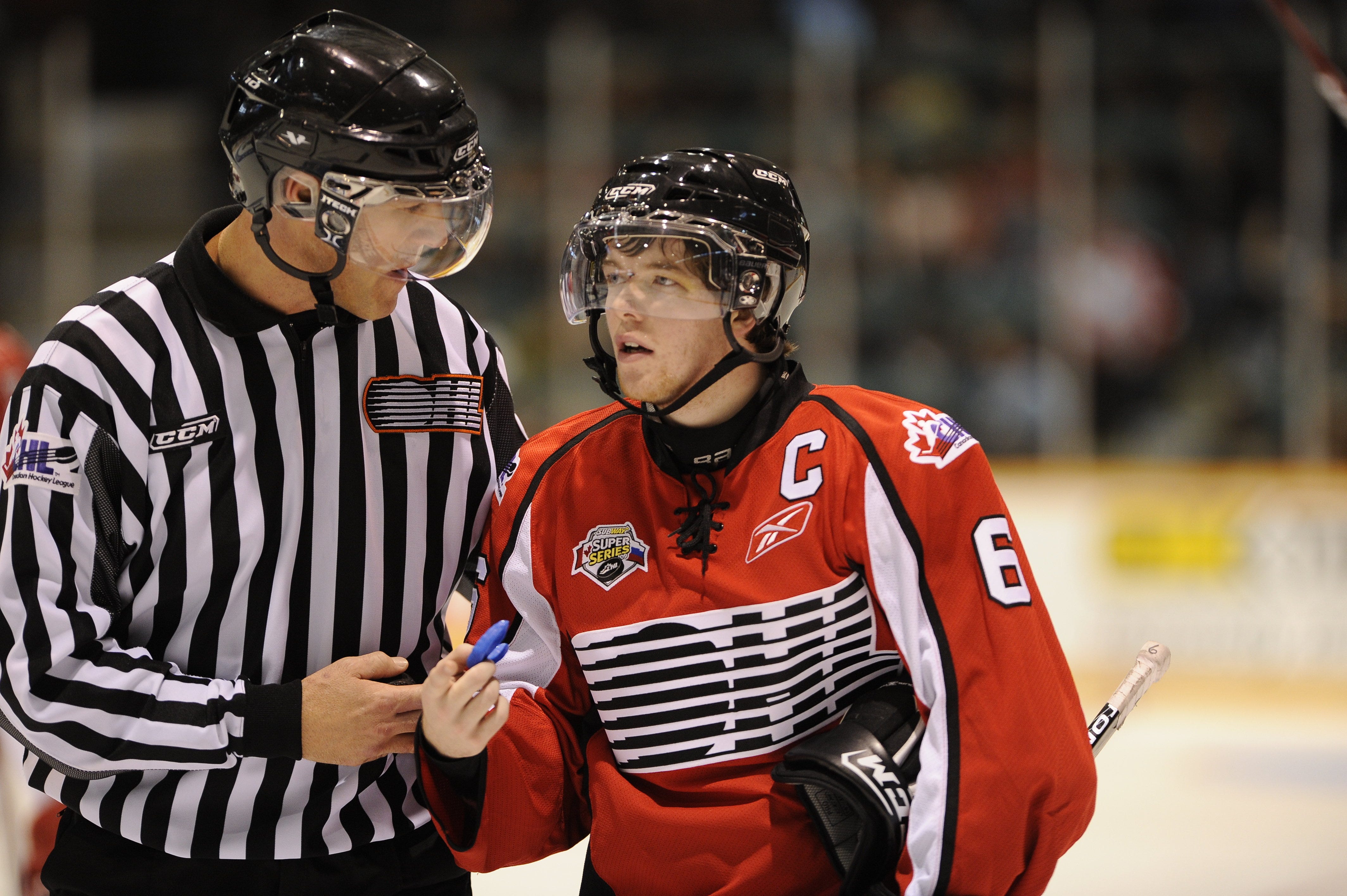
Instead, Ellis took the captain’s ‘C’ and put the entire franchise on his shoulders.
Operating as the team’s primary breakout, power-play conductor, and shutdown anchor, he dictated the tempo of every game he played. He wouldn’t let the standard slide.
Teams arrived at the WFCU Centre expecting an easy night against a hollowed-out contender, only to run straight into a dominant senior campaign from a captain who simply refused to yield an inch of ice. His presence alone preserved the championship throughline and kept Windsor competitive against the best clubs in the league.

4. An Unshakable Foundation
By the time the Nashville Predators brought Ellis into the professional ranks, he had authored one of the most decorated careers in modern junior history.
“I believe there’s some really good quality to his game, especially the offensive part of the game, which he’s always been so good at,” said Predators general manager David Poile upon securing him.

For Ellis, every accolade—from the rings to the individual awards—remained anchored in the culture built during those early seasons alongside late captain Mickey Renaud:
“Being able to learn from Mickey in my first year helped a lot,” Ellis said. “He always made everyone feel part of the team. We were like a family in Windsor and I think it contributed to our success.”
When Windsor retired his jersey to the rafters, Ellis acknowledged the community and staff that believed in him from the beginning:
“I grew from a young teen leaving home into a young man ready to conquer my dreams,” said Ellis. “Everyone here tonight has guided me to where I am today.”
He arrived in an auto-town rink with the wrong measurements, laid out opposing stars who dared to drop their heads, and graduated as the heartbeat of the greatest era in Spitfires history.
Photos: Aaron Bell/OHL Images